In 2010, 27% of countries had strong alcohol pricing and tax policies. By 2019 the figure was 78%. For something as slow as national lawmaking, that's a big shift.
The same dataset has a messier side. By 2019, fewer than a quarter of countries had a strong national alcohol plan, and 40% had no plan of any kind. Governments got good at pulling one lever. The rest of the control panel they mostly left alone.
I read this paper because my days go into the small, personal end of drinking decisions. This is the other end: what a country decides long before anyone pours a glass.
What they did
The researchers took policy data on 141 countries from the World Health Organization's Global Information System on Alcohol and Health. Each country got a score on the Alcohol Preparedness Index (API), a validated measure of how well its alcohol policies are set up. The index covers five domains:
- national policy frameworks
- production, pricing, and taxation
- marketing and availability
- drink-driving countermeasures
- monitoring and surveillance
The main question was simple: how much did each country's score change between 2010 and 2019? The team grouped the trends by region, then ran an adjusted regression to see which country traits explained the change. They looked at population size, the Human Development Index, and per capita alcohol consumption.
This is an ecological study. It compares countries, so it can map policy but can't tell you what any single policy did to anyone's health.
What they found
- Overall score. The median API went from 57.0 in 2010 to 74.8 in 2016, then slipped to 67.8 in 2019. Still above where it started.
- Taxes. Strong pricing and tax policy jumped from 27% of countries to 78%. No other domain moved this clearly.
- Monitoring. By 2019, 47.5% of countries had strong monitoring and surveillance.
- Planning. Fewer than 25% had a strong national plan, meaning a written policy plus a formal action plan to put it into practice. 40% had no plan at all.
- Marketing. Controls on marketing fell behind, especially in low-income regions.
- Population. Countries with larger populations improved less (β = -19.1, p < 0.05).
- Wealth and drinking levels. Neither the Human Development Index nor per capita consumption was significantly linked to how much a country's score changed.
That last one surprised me a little. I'd have bet richer countries, or heavier-drinking ones, would move faster. In this data they didn't.
What it means
The tax result makes sense to me. A tax is one decision, made by one ministry, and it brings in money. A national plan needs many decisions across several agencies, plus someone to see them through. My guess is that this explains the gap. The paper doesn't test why some domains moved and others stalled, though, so treat that as my reading.
The population finding fits the same pattern. A bigger country has more regions and more interests to line up. Again, my interpretation, not something the authors measured.
The authors make one point I think matters more than the headline numbers. The index records whether a policy exists, not whether anyone enforces it. A country can score well on paper and do little in practice. Their next step: turn policy presence into implementation, with extra attention on the domains most tied to alcohol-related liver disease. Earlier research has linked stronger policy environments to lower rates of alcohol-related liver disease, liver cancer, and cardiovascular deaths. This study adds no new evidence on that link. What it does is show where the gaps are.
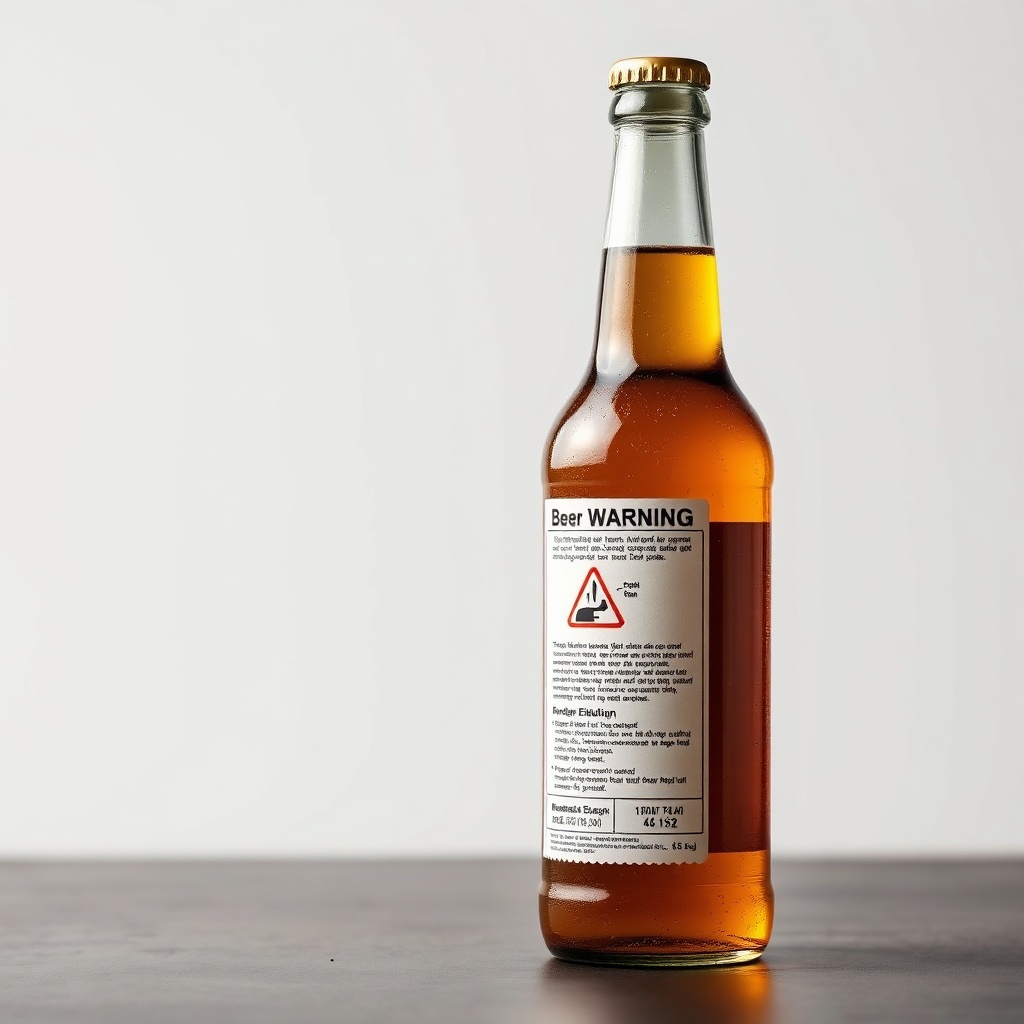
I think of policy as the outer layer of your drinking environment. It sets the shelf price, the ads you see, and the hours a shop stays open. I've written before about how the environment around you does more of the work than willpower, and national policy is the biggest piece of that environment. Its reach has limits, though. A store audit across Europe found that 70% of alcohol products carry some warning, yet only 0.3% mention actual health harms. Having a rule is one thing. Having a rule that tells people something useful is another.
The inner layer is the evening itself, and no government reaches that part. A tax sets what the bottle costs. It has no say over the moment the table speeds up and you speed up with it. That's the layer I'm building AlcoBalance for: during the night, you notice your pace creeping up, see where your peak is likely to land, and decide whether to ease off or carry on. Whatever you choose, you choose it while you're still in the evening, not the next morning. No bans involved. Sobriety isn't the goal. Your rhythm is.
The data stops in 2019. What I'd most like to see next is whether the slip after 2016 kept going.
Source: JHEP Reports, DOI