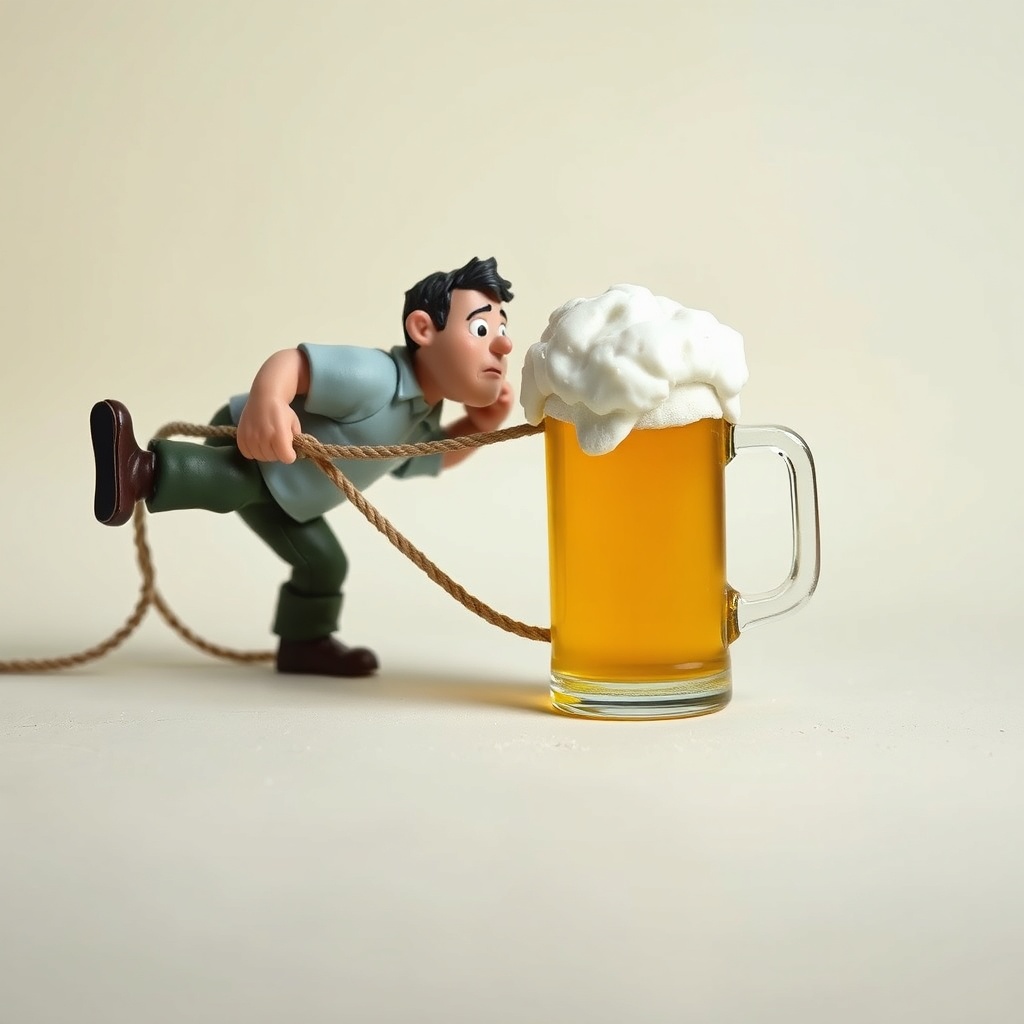
Show someone a photo of a beer and tell them NOT to press the button. Their brain works harder to hold back than it does for a neutral photo. That was true for everyone in this study, binge drinkers or not.
The difference between the two groups showed up in a different signal. I keep coming back to that. It's not what I expected going in.
The paper starts from a gap that's been around for years. Hazardous drinking is going down worldwide, but college binge drinking hasn't followed. So a team of psychophysiologists went looking for what's different in the brains of students who binge.
What they did
They recruited 66 undergraduate drinkers:
- 32 binge drinkers (11 men)
- 34 non-binge drinkers (10 men)
So roughly two-thirds women. Worth noting, since a lot of lab alcohol research skews male.
First, everyone filled out questionnaires on impulsivity, how rewarding alcohol felt to them, and why they drink.
Then they did a Go/No-Go task while wearing EEG (electroencephalography) caps. The setup is simple. Pictures flash on a screen. For one category you press a button fast, for the other you hold back. The researchers recorded ERPs (event-related potentials), the brain's electrical responses in the first fraction of a second after each picture.
The task ran in two versions:
- Cue reactivity. Press for alcohol pictures, hold back on neutral ones.
- Inhibitory control. The reverse: press for neutral pictures, hold back on alcohol.
The second version is the interesting one. It asks your brain to say no to a drink, over and over, at speed.
What they found
The questionnaires split the groups the way you'd guess, with one twist.
- Impulsivity. Binge drinkers scored higher.
- Reward. Binge drinkers said alcohol rewarded them more.
- Social motives. Non-binge drinkers scored HIGHER on drinking for social reasons.
That last one surprised me a little. The students who drink to be with people were the ones who didn't binge.
The brain data told two stories.
The first one is shared. A component called N2 got larger whenever people had to hold back on an alcohol picture. The authors read it this way: stopping takes more effort when what you're stopping for is a drink. Both groups showed it.
The second is where the groups split. Binge drinkers had smaller P3 components, early and late, across the whole task. The authors take this as support for P3 as a biomarker of hazardous drinking risk. Earlier research had already pointed there.
What it means
Here's how I read it, with the usual hedge: this is a snapshot of 66 students. It can't tell you whether a smaller P3 came first and made binge drinking more likely, or whether binge drinking shaped the signal. And clicking at photos in a lab is a long way from a crowded bar at 1 a.m.
Still, two things stick with me.
First, the extra effort to say no to an alcohol cue is NOT a binge drinker thing. Everyone had it. A drink in front of you makes stopping harder, full stop. That fits something I've written about before: the cues around you do more of the work than willpower does. If holding back costs every brain a bit extra, betting on in-the-moment restraint all night is a shaky plan for anyone.
Second, the binge drinkers here weren't defined by one thing. More impulsivity, more reward from alcohol, a weaker P3. It's a cluster. And it lines up with another study suggesting impulsivity, more than stress, is what pushes young drinkers to drink in the moment.
So if stopping is slow and costly right when the cue is in front of you, the useful move is to decide a little earlier, and where you can see it. That's the part I think about with AlcoBalance. Some nights the next glass shows up before you've decided anything. The app shows your pace picking up and where your peak is heading. You can ease off while it's still your choice, not a split-second stop your brain has to fight for.
I don't think a smaller P3 is destiny. But it's a decent reason to stop treating "just say no in the moment" as the whole strategy.
Source: International Journal of Psychophysiology, DOI