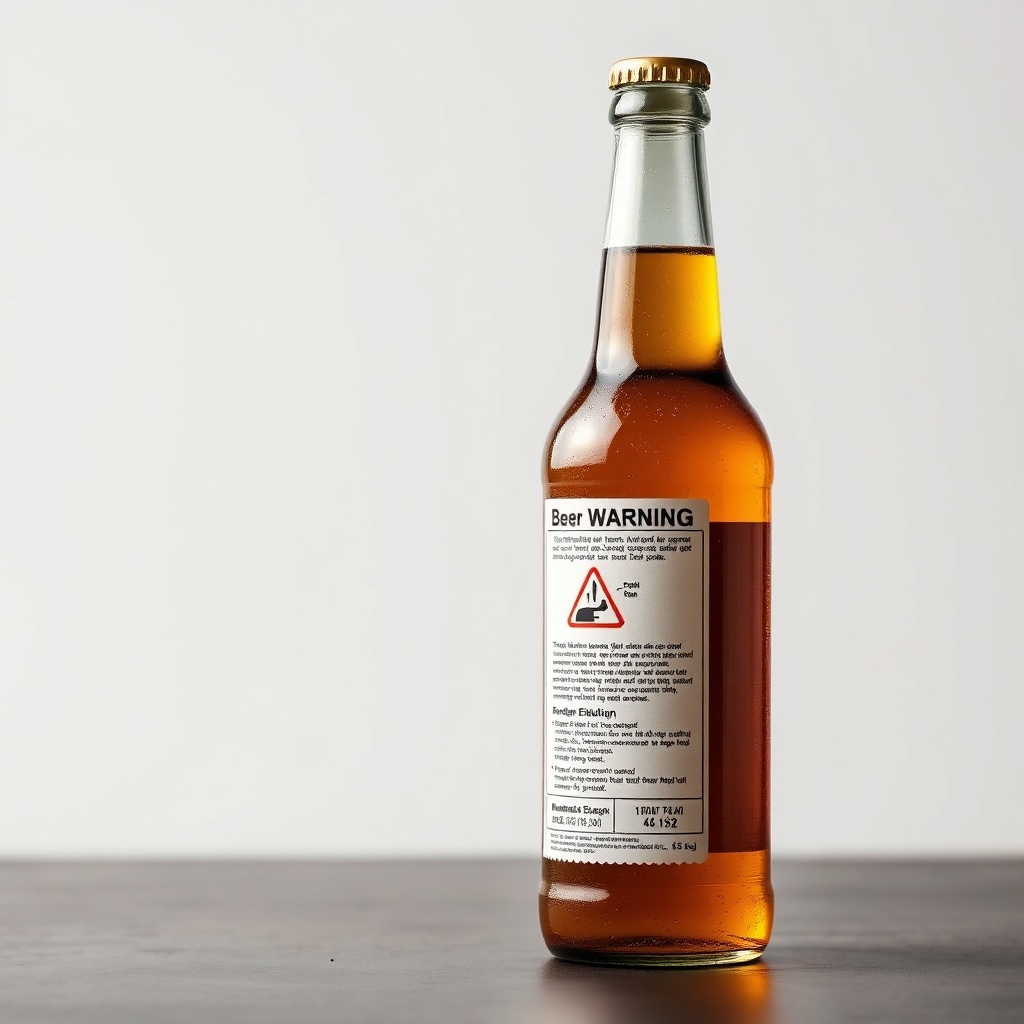
A bottle of wine in Europe comes with a crossed-out pregnant woman. Maybe a car. Maybe a minimum-age badge. I've picked up enough bottles in airports and corner shops across the continent that this barely registers anymore. What's almost never on the label is anything about what the alcohol is doing to your liver, your sleep, or your memory. A new store audit across 13 countries quantified exactly how thin the information is.
What they did
Researchers went into 32 stores across 23 cities in 13 European countries and audited 1,636 alcohol products. The premise: health warning labels are supposed to inform consumers - but there's been little recent data on what those labels actually say. So they pulled bottles off shelves and recorded what was there - whether a health warning was present, what topic it covered, and whether the format was a pictogram, text, or both. One cross-sectional snapshot, not a trend study.
What they found
69.7% of the 1,636 products carried at least one health warning. The breakdown by topic:
- Pregnancy: 68% of labeled products
- Drink-driving: 21.4%
- Age restrictions: 16.6%
- Responsible drinking: 6.9%
- Health harms from alcohol: 0.3%
About 1 in 4 products (26.7%) had warnings covering more than one topic. The format breakdown: mostly pictograms only (62.3%), with 6.7% combining a pictogram with text, and 0.7% using text alone. A pictogram communicates in rough strokes - a crossed-out pregnant woman is instantly legible. A combined pictogram-and-text warning can say much more: what the risk is, for whom, how severe. That combination appeared on fewer than 1 in 15 products.
Country coverage varied widely. Lithuania, France, and the Netherlands had more than 90% of products with at least one warning. Croatia, Poland, Slovenia, and Greece were all under 50%. The spread is large enough to be meaningful even if the sample is thin (32 stores across 13 countries is not nationally representative; I'd treat the country figures as directional). The pattern tracks with regulation: the high-compliance countries have legislation requiring warnings; the others rely on voluntary commitments from producers.
What it means
The 0.3% figure is the one that stuck with me. The label system, as it currently operates, is built around communicating to specific at-risk groups - pregnant women, drivers, minors. Those warnings exist for good reason and address real risks. But the ordinary adult drinker - the person who just wants to understand what they're consuming - gets almost nothing relevant to their situation.
A pregnancy pictogram is something producers have little reason to resist: it targets a specific sub-group and implies nothing uncomfortable about the product for the rest of us. A warning about disrupted sleep, or what regular drinking does to the liver over time, is a different kind of claim. It says the product might be a health concern for any adult who uses it. That's probably why it barely appears.
The country breakdown makes the structural cause visible. The three highest-compliance countries - Lithuania, France, the Netherlands, all above 90% - have national legislation. The four lowest - Croatia, Poland, Slovenia, Greece, all below 50% - rely on industry self-regulation. The practical difference between asking and requiring shows up directly in the numbers.
That gap - almost nothing about what alcohol does to the ordinary drinker in the moment - is where something like AlcoBalance sits. Not a label, but a live read on your own curve: your pace right now, your peak, when it fades. The bottle communicates to a pregnant woman; the app communicates to you.
The researchers call for stronger regulatory approaches at the EU or national level. The country comparison makes a clear case for why.
Source: Drug and Alcohol Review, DOI