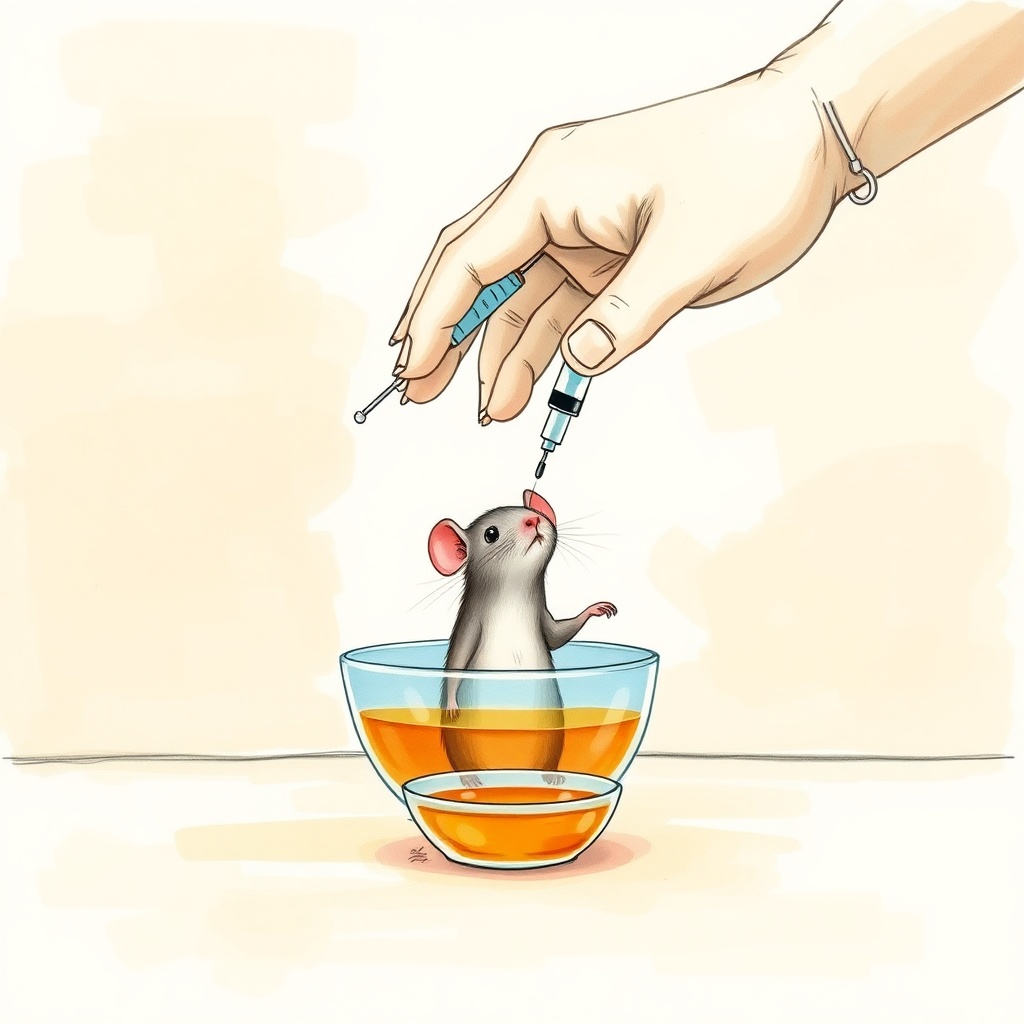
I keep running into GLP-1 papers. I've already written up two mouse studies on liraglutide here, and every few months another one lands. So when a review in Biological Psychiatry gathered the animal work in one place, I wanted the whole picture. One circuit at a time only gets you so far.
GLP-1 (glucagon-like peptide-1) is a hormone with effects all over the body. Drugs that mimic it are already approved for type 2 diabetes and obesity. Exenatide is the short-acting one. Liraglutide, dulaglutide, and semaglutide (the active ingredient in Ozempic and Wegovy) last longer. This review asks something narrower: what do these drugs do to drinking in lab animals, and why?
What they did
Nobody ran a new experiment here. The review collects preclinical studies, meaning work in rats and mice, on GLP-1 receptor agonists and alcohol. Two groups of drugs:
- Short-acting: exenatide, usually called Ex4 (exendin-4) in lab papers
- Long-acting: liraglutide, dulaglutide, and semaglutide
The underlying studies measured four things:
- How much alcohol the animals drank
- How motivated they were to get it
- Whether they went back to it after a break (researchers call this relapse-like behavior)
- How rewarding alcohol seemed to them
Reward is the slippery one, so labs read it indirectly. Does alcohol rev up the animal's movement? How much dopamine does it release in the nucleus accumbens, a hub of the brain's reward system? And does the animal start to prefer the spot in its cage where it got alcohol?
The abstract doesn't list how many studies went in, the doses, or the sample sizes. So I can't tell you how big any single effect was. It's a narrative review: a guided tour of the literature, no pooled numbers at the end.
What they found
The direction is consistent across drugs:
- Male animals on Ex4 drank less alcohol, worked less hard to get it, and showed less relapse-like behavior.
- Liraglutide, dulaglutide, and semaglutide each reduced drinking, in male or female animals depending on the study.
- Both the short- and long-acting drugs blunted alcohol's reward in male mice. Less of the movement boost, less dopamine release, a weaker pull toward the alcohol spot.
Look at the sexes again. The cleanest reward data come from males only. Females show up only in the long-acting drinking studies.
The working explanation is simple. Animals drink largely because alcohol feels good. Turn that reward down and intake drops with it. Earlier mouse work I covered traced liraglutide's effect to a specific circuit in the septum, which fits this story nicely.
The review is careful, though. It names other things that could produce the same drop. These drugs slow gastric emptying, so whatever the animal drank sits in the stomach longer. They can cause nausea. They may also raise stress.
What it means
Those alternatives matter more than they look. A mouse that feels queasy will drink less of almost anything. That's a very different finding from a drug that quiets the brain's response to alcohol specifically. On an intake chart, the two look identical.
The reward measures help here, a bit. Dopamine release and place preference are closer to "how much does the brain like this" than a simple count of milliliters. But those come from male mice, and the review doesn't claim the alternatives are ruled out. I'd want to see each one tested head-on before leaning hard on the reward explanation. (Maybe some of the underlying papers do this. The abstract doesn't say.)
The review frames all of this as groundwork for treating AUD (alcohol use disorder). That's where it stays: groundwork. Every result is from rodents. These drugs are approved for diabetes and obesity. Whether the animal effect carries over to people with AUD is a question for human trials, and this review doesn't cover them.
There's also a gap between the animal setups and ordinary drinking. Relapse-like behavior in a rat after forced abstinence is a model built for studying disorder. It says little about a person who has two glasses of wine on a Friday. I'd be careful drawing any line from these cages to a dinner table.
If you take one of these drugs for diabetes or weight and drinks have started to feel different, the animal work offers one plausible mechanism and a few duller ones. It can't tell you which applies to you. That's a conversation for whoever prescribed it.
What I take from it: the reward story is the most interesting one here. It's also the one the current data can't fully separate from an animal that simply feels a little off. A Neuron editorial on the septum finding made the circuit look tidy. This review is a useful reminder that the stomach is still in the room.
Source: Biological Psychiatry, DOI