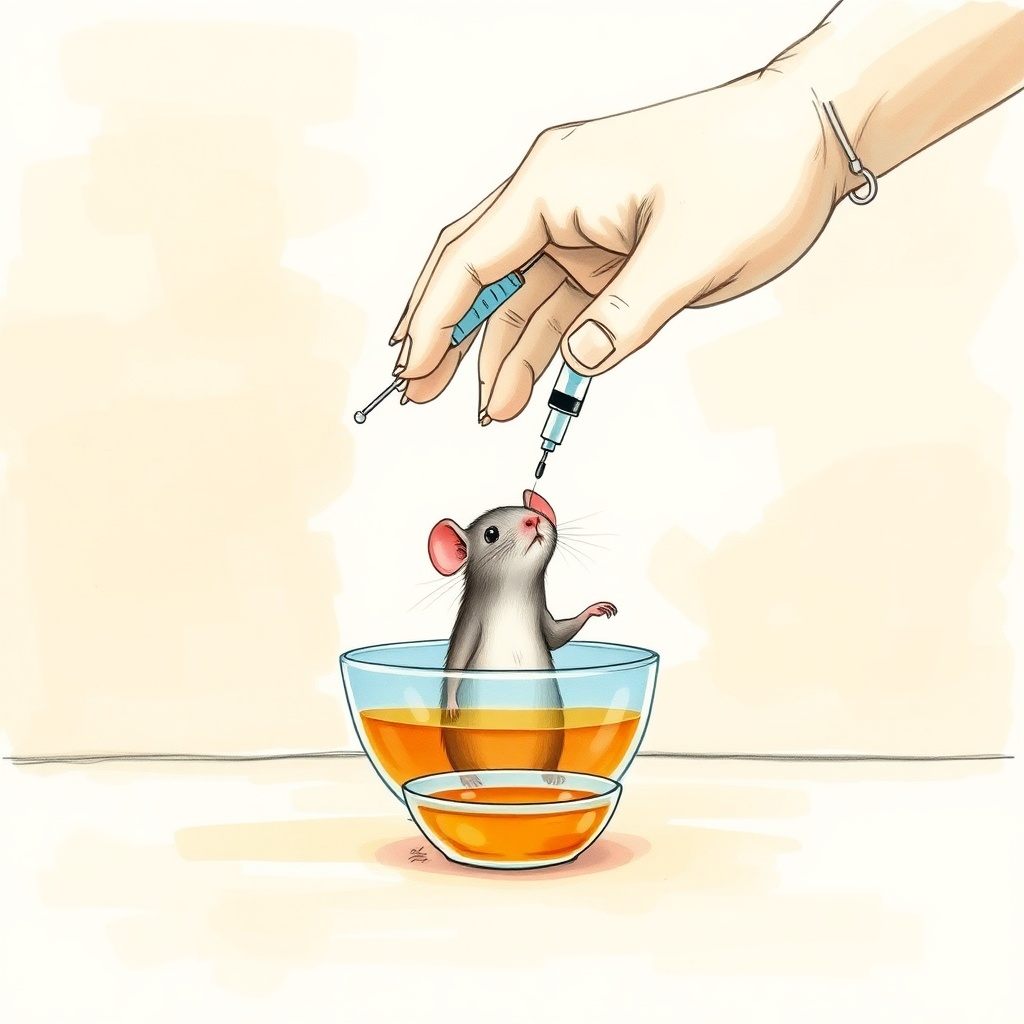
Liraglutide is a diabetes and weight-loss drug. In rodents, it also cut how much alcohol they drank, and how hard they worked to get more of it. A new editorial in Neuron walks through the study that pinned down where in the brain that happens.
The why matters here. Doctors and patients have been swapping anecdotes for a couple of years now: people on GLP-1 drugs (the Ozempic and Wegovy family) report wanting alcohol less. Anecdotes are cheap. A circuit you can point to is not.
What they did
This is an editorial by one group, commenting on a primary study from Tian and colleagues. So take the numbers as a summary of someone else's work, read closely by people who know the field.
Tian's team gave rodents systemic liraglutide, a GLP-1 (glucagon-like peptide-1) receptor agonist. Same drug class prescribed for diabetes and weight loss. Then they measured two things: how much alcohol the animals drank, and how much effort they put into seeking it out.
From there they zoomed in. They looked at the lateral septum, a region deep in the brain tied to emotion and motivation, and asked which neurons there actually carry the GLP-1 receptor. The receptor is the docking point the drug binds to, so those cells are where liraglutide can act directly.
What they found
- Liraglutide lowered both alcohol intake and alcohol seeking. Not just how much the animals drank, but how motivated they were to get it.
- The effect ran through GLP-1 receptor-expressing neurons in the lateral septum. Knock out the receptor there, and the drug loses its grip.
- Those neurons are GABAergic. GABA is the brain's main "quiet down" signal, so this is an inhibitory microcircuit, a local loop that dampens activity rather than fires it up.
So the picture is fairly specific: a systemic drug, a single region, a defined set of cells, and a receptor you can name. That's a lot tighter than "GLP-1 drugs seem to reduce drinking."
What it means
What I like about this one: it moves the GLP-1-and-alcohol story from vibes to mechanism. If a drug reduces drinking through a receptor on a known cell type in a known region, you can test that. Block it, tweak the dose, hunt for the same wiring in a human brain. It's a target, not just a correlation.
A few things keep me honest about it, though. This is an editorial, not the raw study, and the underlying work is in rodents. A mouse septum is a reasonable stand-in for asking mechanistic questions, but the human version of this circuit is almost certainly messier, and liraglutide's known side effects would shape any real-world use. "It works in mice" and "you should ask your doctor for it" are separated by years of clinical trials that haven't happened yet.
Still, the direction is interesting. For a long time the brain side of drinking got framed as reward and craving, the stuff that pushes you toward the next glass. This is the opposite lever: an inhibitory circuit that turns the wanting down. It fits with other work mapping specific wiring behind drinking, like a brain pathway linked to binge drinking that runs in opposite directions for men and women. The map is filling in, one region at a time.
And it's a reminder of how much of the pull to drink lives below conscious choice. If a receptor on one cluster of septal neurons can move alcohol seeking up or down, then the feeling of "I could really go for a drink" isn't purely a decision. It's partly chemistry you didn't vote on, which is worth sitting with the next time stress cranks up a craving and it feels like it came from nowhere.
What this study doesn't do is hand anyone a treatment. It hands them a wire to follow. That's the part I'll be watching.
Source: Neuron, DOI